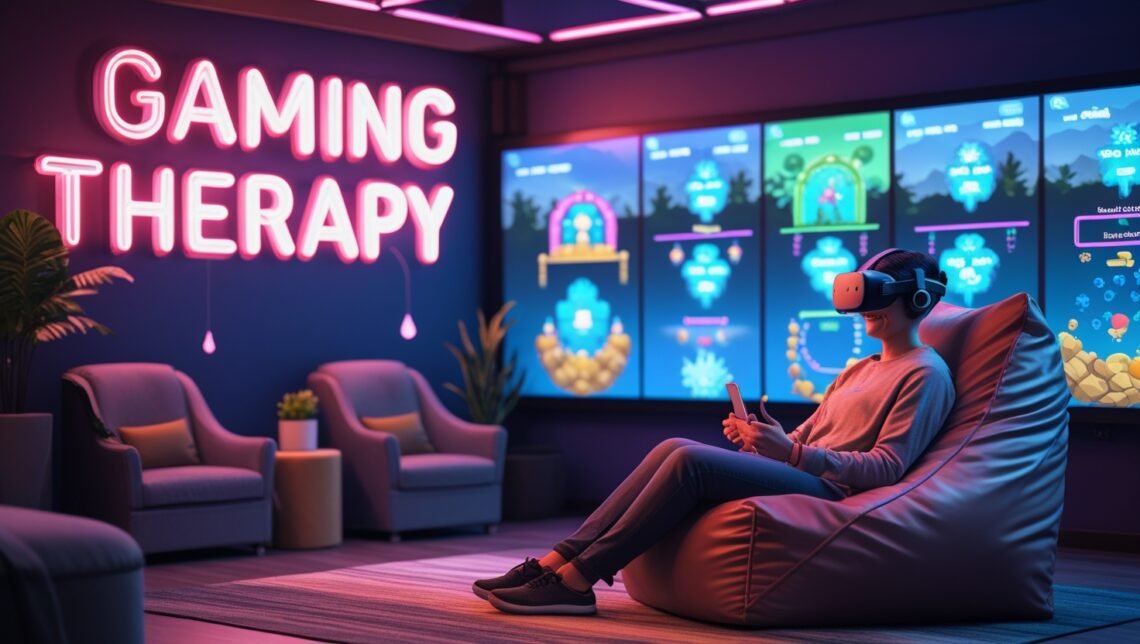
Imagine a world where play becomes a pathway to emotional strength. Gaming Therapy is turning screens into sanctuaries, offering Life Lessons for Wellness through interactive challenges and virtual communities. This dynamic approach transforms video games from mere entertainment into powerful tools for mental and emotional growth.
From Play to Healing:
Video games have long been seen as simple distractions, but today they are taking center stage in therapeutic circles. The journey toward Gaming Therapy began when clinicians recognized that game-based learning could tackle issues like anxiety, depression, and stress. Pioneering studies and real-world applications have shown that structured gaming sessions can lead to measurable improvements in mood, cognitive flexibility, and social skills.
This new therapeutic landscape harnesses the playful energy and immersive nature of digital games to create tailored experiences that support mental wellness. Whether through action-packed challenges or narrative-rich adventures, players are not just engaging with a story—they are gathering valuable life lessons for wellness. This evolution is redefining the blend of psychology and play, placing interactive digital experiences at the forefront of modern healing.
The Neuroscience of Play:
Behind the console lies a fascinating science. When engaged in video games, the brain lights up with activity in regions associated with reward, problem-solving, and emotional regulation. Gaming Therapy leverages these neurological responses to help rewire negative thought patterns and improve mental resilience.
Studies suggest that the dopamine release during immersive play can boost mood and counteract stress, while cognitive challenges in games enhance focus and decision-making. This scientifically backed approach not only treats symptoms but also builds a foundation for lasting emotional strength. By combining measurable neurological benefits with engaging content, Gaming Therapy offers a compelling model for how digital play can nurture overall wellness.
Virtual Challenges:
Every game level offers more than just entertainment, it presents an opportunity to master resilience. Whether it’s overcoming a frustrating boss battle or navigating complex puzzles, players are constantly learning to persevere. Gaming Therapy transforms these virtual challenges into practical life lessons, teaching players to adapt, persist, and think critically under pressure.
The beauty of this digital framework is its universal applicability. The strategies that help a player solve in-game problems can translate into real-life skills, such as coping with setbacks and building confidence. Experiencing failure in a safe, controlled environment allows players to experiment with different approaches until they succeed. This iterative process mirrors the journey of personal growth, turning every defeat into a chance to learn, a cornerstone of Life Lessons for Wellness.
Emotional Intelligence and Empathy:
Interactive narratives and role-playing environments offer unique opportunities to develop emotional intelligence and empathy. Many modern video games invite players to adopt diverse perspectives, encouraging them to understand complex emotional narratives and make decisions that affect others. In this way, Gaming Therapy creates safe spaces where players can explore emotions, practice empathy, and gain insights into human relationships.
Such immersive experiences are particularly beneficial for individuals who struggle with social interactions. By engaging in scenarios where consequences and outcomes are simulated, players can experiment with communication and conflict resolution without bearing real-world risks. This controlled yet authentic exploration nurtures compassion and broadens emotional awareness, delivering authentic Life Lessons for Wellness that extend far beyond the screen.
Mindfulness and Focus:
The meditative quality of some video games offers players an opportunity to practice mindfulness. Whether it’s the calming pace of an exploration game or the rhythmic challenges in puzzle-based titles, focused play can help reduce stress and anchor the mind in the present moment. Gaming Therapy taps into these moments of deep focus to encourage mental clarity and relaxation.
As players immerse themselves in detailed virtual worlds, distractions from everyday stressors give way to an environment that promotes concentrated engagement. This mindful absorption not only eases anxiety but also builds the mental stamina needed for sustained focus. With every level completed, players gain a tangible sense of accomplishment that reinforces their ability to manage emotions and remain present, a critical facet of Life Lessons for Wellness.
Future Horizons:
The rapid evolution of digital therapies promises exciting new integrations of Gaming Therapy into conventional wellness programs. Forward-thinking therapists and researchers are experimenting with hybrid models where video games complement traditional treatments. For example, in clinical settings, customized game modules are beginning to support cognitive behavioral therapy, offering interactive exercises that bolster therapeutic insights.
As technology advances, we’re likely to see more sophisticated games that are tailored to individual therapeutic goals. Imagine virtual reality experiences designed to simulate real-life stressors in a controlled way, or multiplayer environments that encourage supportive social interactions. These innovations could revolutionize how mental health services are delivered, making therapeutic interventions more engaging and accessible. The horizon shines with promise, as Gaming Therapy becomes not only a tool for healing but also a bridge that connects digital innovation with holistic wellness.
Conclusion:
Gaming Therapy transforms the digital playground into a space for healing, delivering potent Life Lessons for Wellness through interactive experiences. By merging neuroscience, resilience-building, and mindfulness with the engaging power of video games, a new frontier in mental health is emerging.
FAQs:
1. What is Gaming Therapy?
It uses structured video game play to improve mental health and build emotional resilience.
2. How do games teach life lessons?
Games offer challenges that foster problem-solving, empathy, and persistence in a risk-free environment.
3. Can Gaming Therapy really help reduce stress?
Yes, immersive gameplay can enhance mindfulness and trigger dopamine release to improve mood.
4. Is Gaming Therapy for everyone?
While it benefits many, professional guidance ensures that game-based interventions suit individual needs.
5. How are emotional skills developed through gaming?
Interactive narratives and role-playing scenarios encourage empathy and effective communication.
6. What does the future hold for Gaming Therapy?
Continued innovations like virtual reality and hybrid therapy models will further integrate gaming into mainstream wellness.